See Our Full Engineered Oak Flooring Range

STRUCTURE
There has been a fair amount of confusion over the difference between engineered flooring and laminate flooring.
Laminate flooring (or floating wood tile as it is known in Canada and the United States) is a synthetic flooring comprised of a printed plastic top bonded to a ply or fibreboard backing. The printed top layer can be made to “look” like a real wood floor, but we’ve yet to see one that does!
Due to their simplicity in design, laminate floors are one of the easiest types of DIY flooring which makes them popular with homeowners and developers needing a quick hard surfaced floor, however it is vital that laminate boards are not placed in areas of dampness and humidity as this can cause them to lift and warp. Laminate flooring products typically have a short life span (10 years or less).
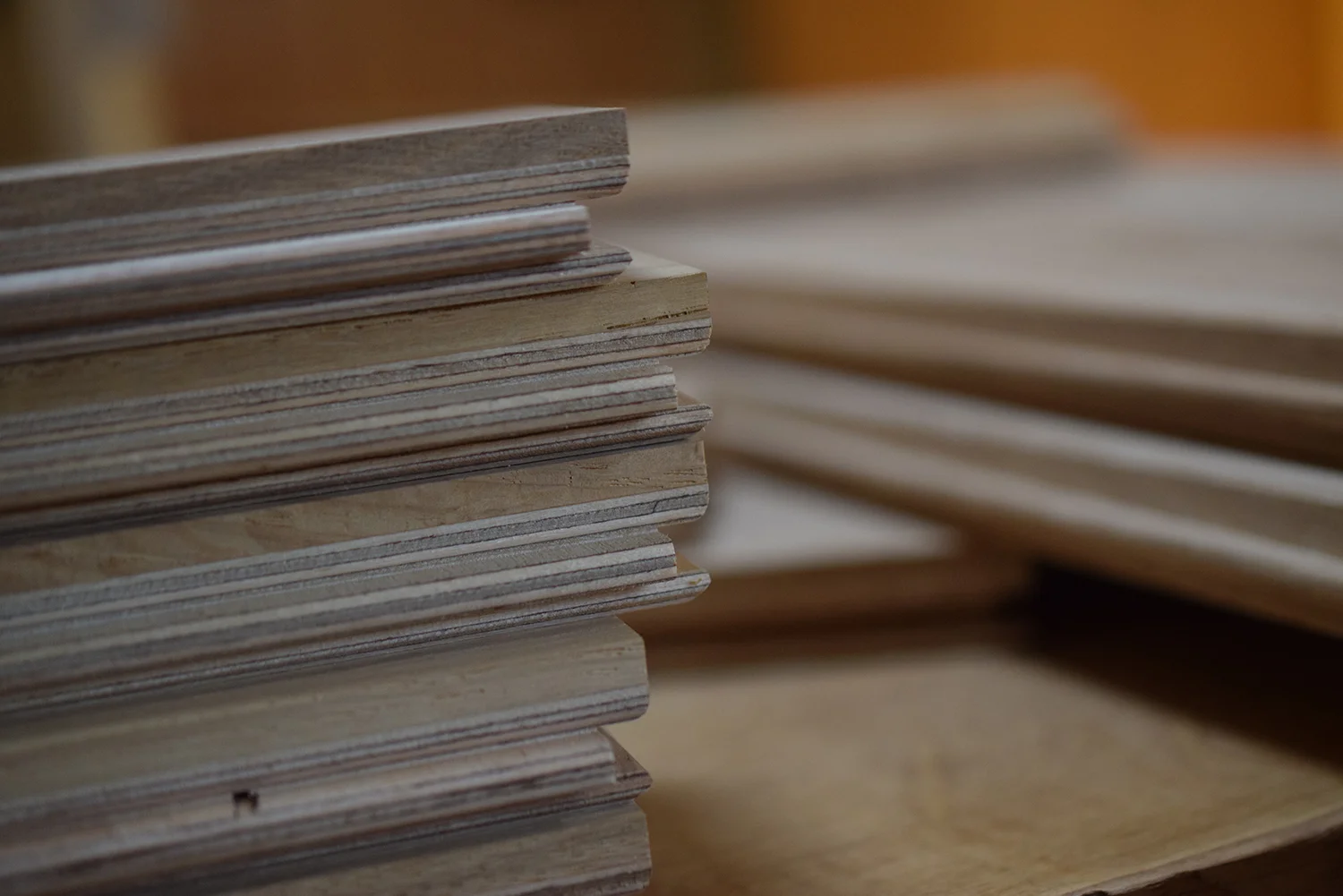
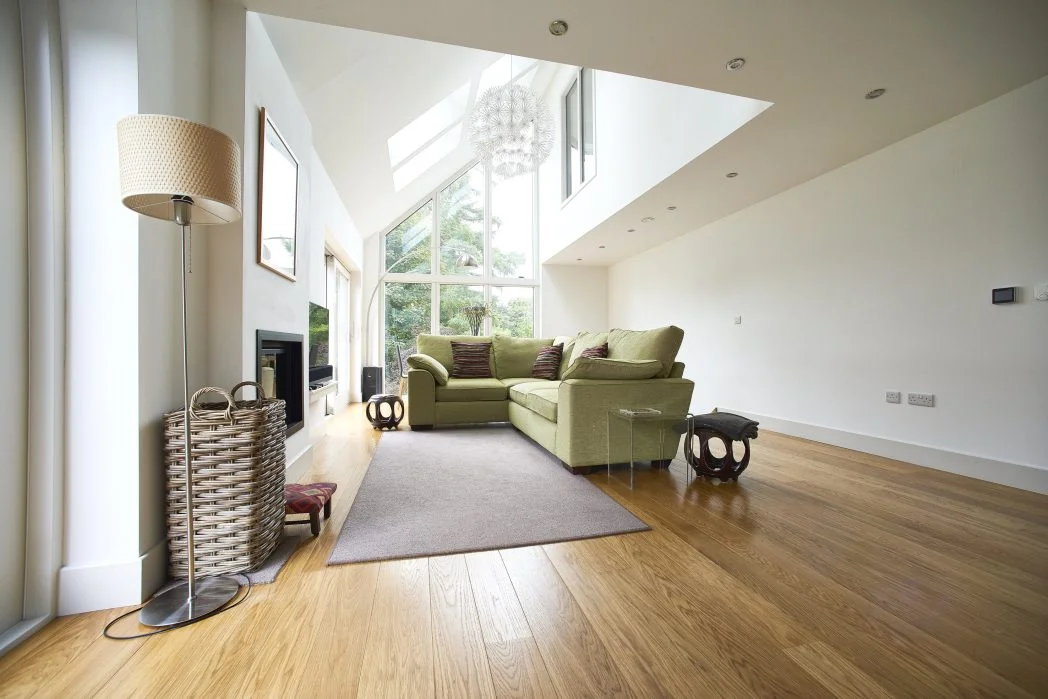
PEAK OAK UNFINISHED ENGINEERED OAK FLOORING
Our 21mm unfinished engineered boards are made up of a 6mm top layer of European oak, bonded to a base board of 15mm Baltic Birch ply (11 layers of ply). The 16mm thick boards consist of 4mm solid European oak wear layer, bonded to a 12mm Baltic Birch plyboard base.
All of our engineered oak flooring boards are traditional long lengths of 2 metres plus – with no short lengths whatsoever. The solid oak top layer and the plyboard base is 100% European sourced and manufactured. At Peak Oak we pride ourselves in sourcing and manufacturing only the best materials.
Once laid, you cannot tell the difference between our unfinished engineered flooring and our unfinished solid oak flooring!
FITTING ENGINEERED OAK FLOORING
Like all natural wood flooring, before you even think about fitting your engineered oak boards, they should first be left to fully acclimatise to their surroundings.
Engineered oak flooring boards should be left around 1-2 weeks to acclimatise in a natural living environment.
Your Sub-floor
Before fitting your floor, you should first check that the sub-floor is completely dry and completely flat. The moisture level of the subfloor should be 4% or below.
When fitting to timber joists or plywood sub-floors, check that these are completely free from rot and treated for woodworm.

Nailing Or Screwing Down Your Floor
Whilst traditionally oak boards were nailed through their top surface into the floor joists below, these days (thanks to the introduction of tongue and groove boards) a more discreet method is used.
Secret nailing or screwing, involves using a nail gun or power driver to drive the fixing through the tongue of each board into the sub-floor or joist.
As the tongues are hidden by the groove of the next board, the fixings are also hidden, producing a fixing free finish to the laid floor. These fixings should be made approximately 300 – 450mm apart.
For solid oak flooring, the maximum width of board that could be fitted via this method would be 140mm. Anything wider than this would require surface fixing as well. For engineered oak flooring this would not be the case.
Gluing Down Your Floor
When gluing down engineered oak flooring, it is vital to use an flexible adhesive specific to the job.
The glue has to be extremely strong yet also flexible enough to allow for some movement in the wood. For this, we would recommend glues such as MS Polymer adhesives.
If you use a rigid glue, your oak floor will most likely split or buckle and could even cause structural damage to your home.
Floating Floor
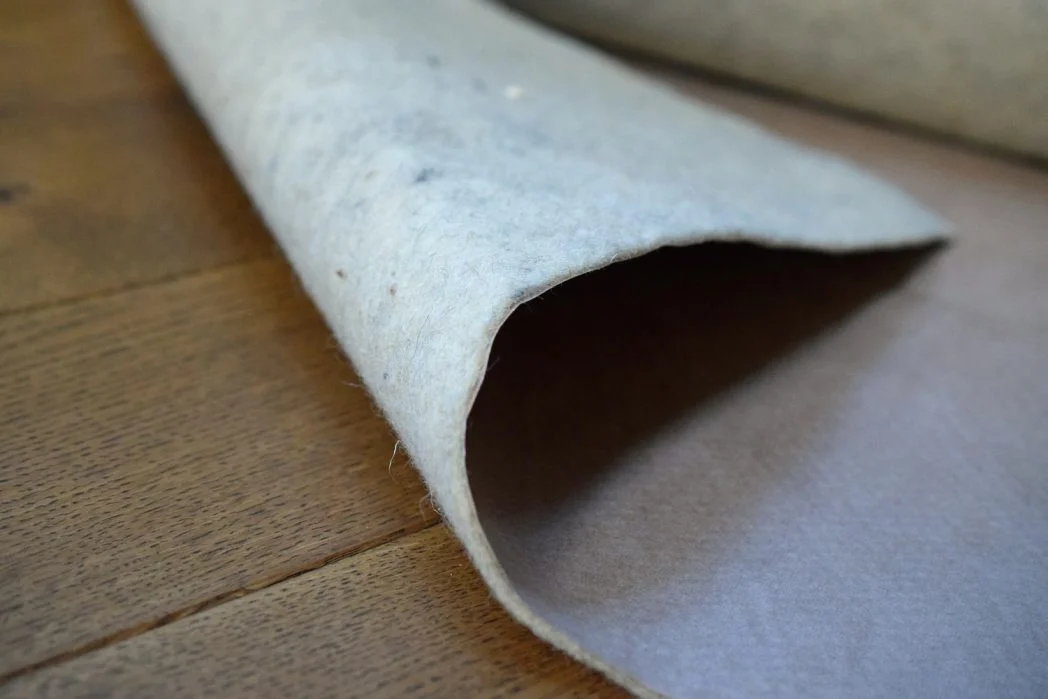
The floating floor method involves laying the engineered oak floor with no direct fixing to the subfloor. Instead the boards are laid over the top of an underlay – such as our sheep wool underlay – where the tongue and grooves of each board are glued together (using a D3 glue).
It is not recommend to float an engineered floor over underfloor heating.
Underfloor Heating
When laying over an underfloor heating system, the engineered oak planks need to be fixed down. Dependant on the type of system, this can be via the screw down method or by the glue down method.
MAINTAINING YOUR ENGINEERED OAK FLOOR
Engineered oak floors are as easy to maintain as solid oak floors.
Sweep or vacuum the floor regularly to keep dust and grit off the surface and a wipe with a damp mop will help to keep your boards looking as good as new.
For boards which have been finished with a hardwax oils, there are a number of wash and care products available, which have been specifically designed to clean and maintain the look of your oak flooring.