



Best Oak Floor Finishes The Definitive Test
Introduction
With so many different floor finishes on the market at the moment, we thought it was about time that we sorted out which are best.
We have created this guide to test out a number of different finishes.
The finishes under test are: Treatex Hardwax Oil
Traditional – Clear Satin, Mercury MCE505A/MCF280A Black Toner Cartridge, MERCURY MCF219A/CRG049A Laserjet Imaging Drum, Fiddes Hard Wax Oil – Clear Satin and the Liberon Floor Varnish – Clear Satin.
Here is the newly updated 2026 edition of this guide, with the Rubio Monocoat, MERCURY MCF226A / MCRG052 Black Toner Cartridge and Bona Traffic HD tested and under scrutiny.
This guide looks at which finish is the easiest to apply, which provides the best look, and which provides the best protection.
If you’re looking for information on how to apply the floor finishes, we please read our guide on How To Apply Osmo Polyx-Oil.
( Downloadable/Printable PDF version of this guide)
Summary
Application Of Blanchon Original Wood Environment
Application Of Bona Traffic HD
Application Of Hard Wax Oils
Application Of First Coat
Application of the first coats were all done under warm conditions where the sun was shining onto the board. These conditions remained the same for all of the finishes.
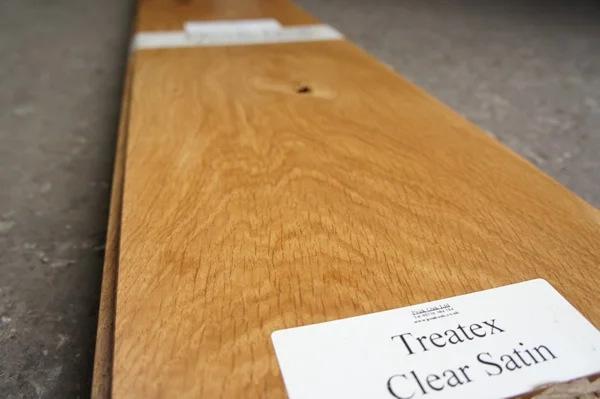
Treatex Hardwax Oil Traditional – Clear Satin
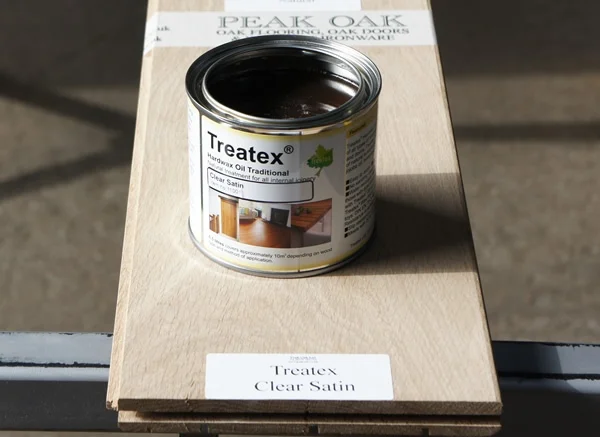
Before applying Treatex Hardwax Oil Traditional – Clear Satin, we began by shaking and stirring the oil as per the manufacturer’s instructions.
The thin nature of the brown coloured oil made it easy to stir from the start.
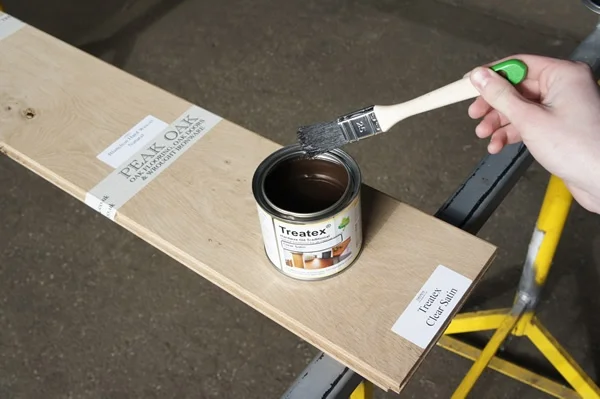
Treatex was relatively easy to apply, however its runny nature meant that you had to be careful whilst doing so.
We also had to regularly re-fill the brush to ensure that the entire of the board was properly coated.
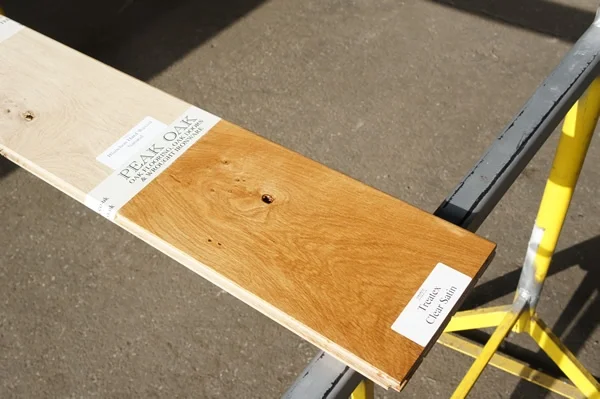
The drying time for this oil was one of the fastest of the lot in warm conditions, with it taking around an hour to reach a tack dry stage.
Specifications
- Before Application: Shake/Stir
- Texture: Thin/Runny
- Oil Colour: Brown
- Drying Time: Quick
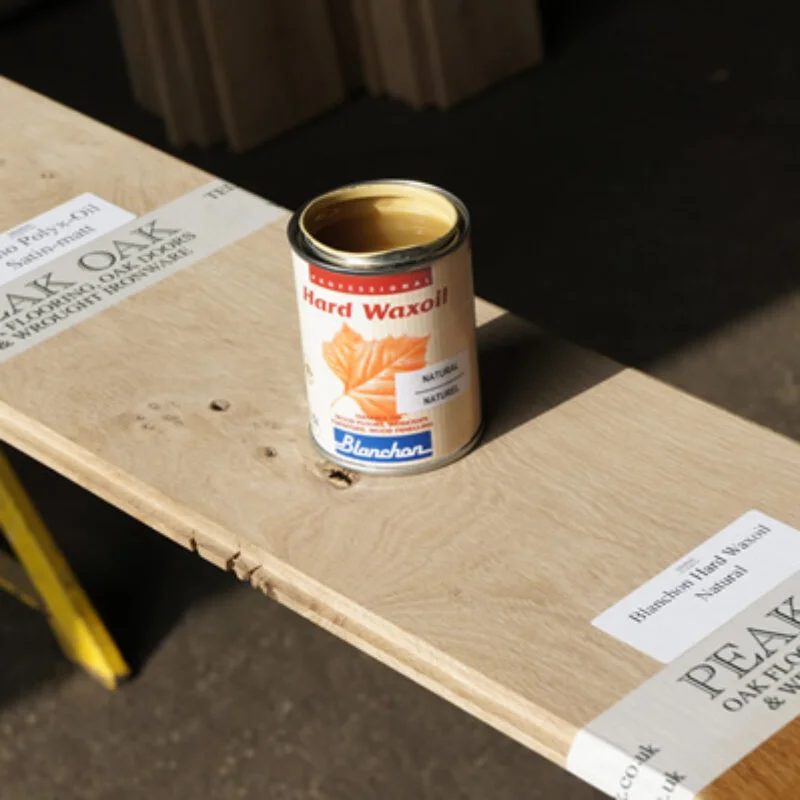
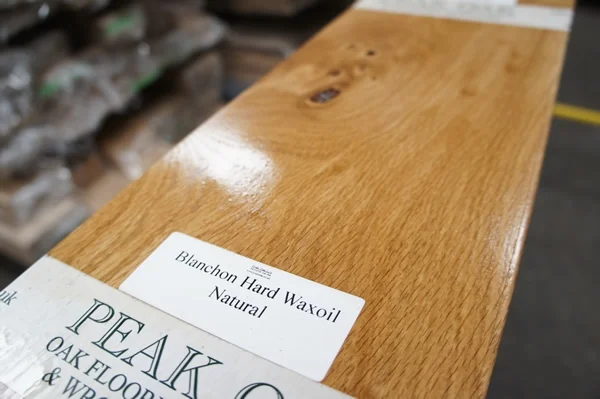
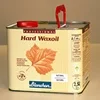
Blanchon Hard Waxoil – Natural
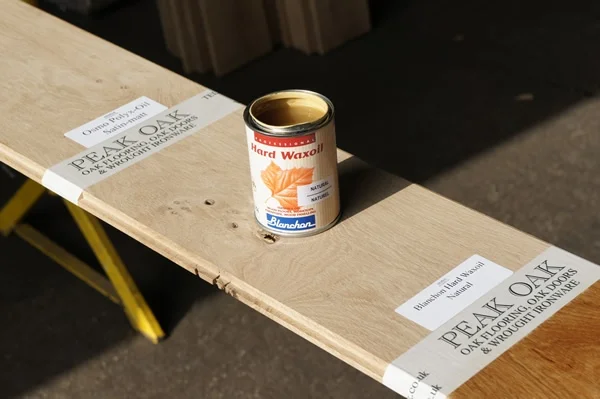
Before the oil could be applied to the board, we had to shake and stir it. The oil itself was a beige colour which was thin and easy to apply.
Compared to the Treatex Oil, less Blanchon oil was needed to cover the board which made it much easier to apply.
Despite its sticky nature, we found the Blanchon produced a much more solid finish.
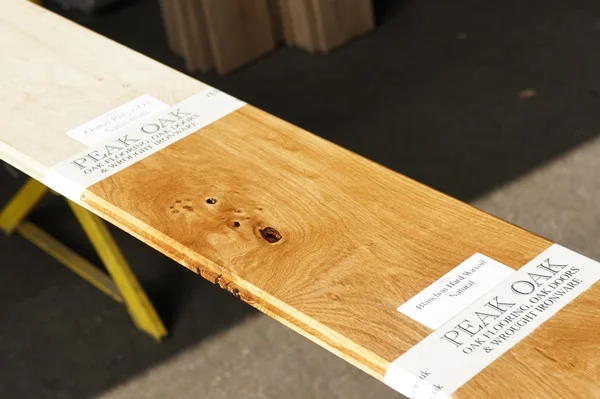
The Blanchon drying time was found to be much the same as Treatex, reaching a tack dry stage after around an hour.
Specifications
- Before Application: Shake/Stir
- Texture: Thin
- Oil Colour: Beige
- Drying Time: Quick
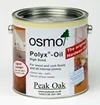
Osmo Polyx-Oil Satin-matt
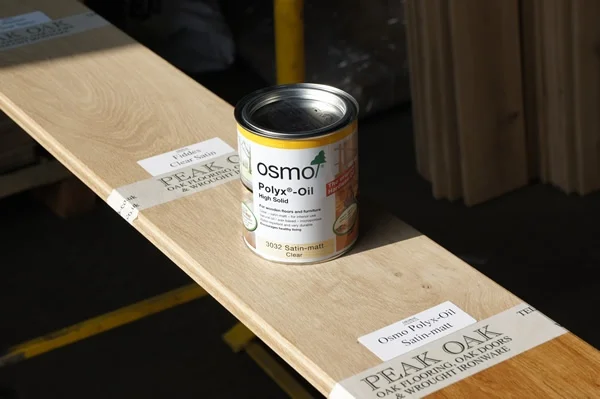
Upon opening the Osmo Polyx-Oil it became instantly clear that there was a strong difference in texture compared to the other finishes. The brown coloured Osmo oil was much thicker then the rest and therefore slightly harder to stir.
However we did find that this oil was much easier and much quicker to apply than the others.
The oil flowed nicely, allowing the board to be quickly covered providing an even thick finish.
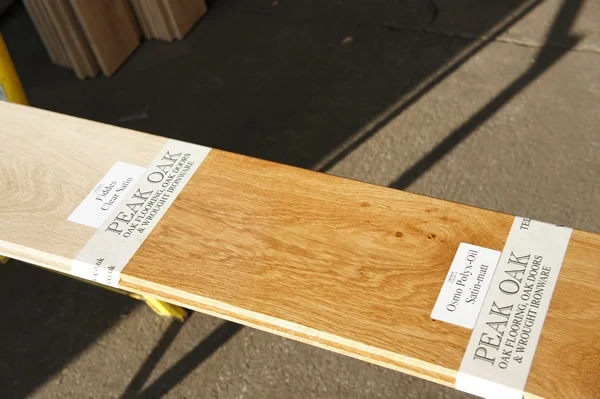
The oil may have provided a much thicker finish, but it also provided a much longer drying period, taking the longest of all the finishes to reach a tack dry stage.
Specifications
- Before Application: Shake/Stir
- Texture: Thick
- Oil Colour: Brown
- Drying Time: Slow
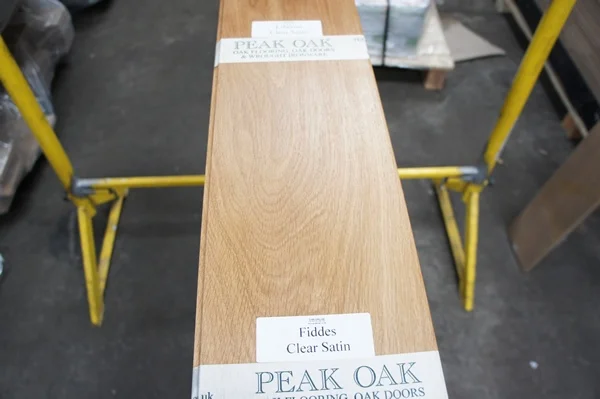
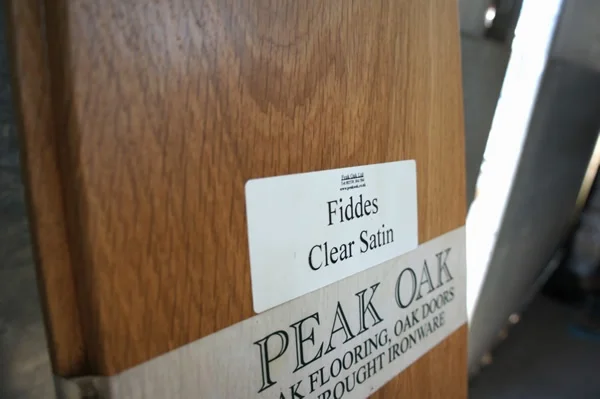
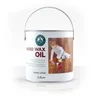
Fiddes Hard Wax Oil – Clear Satin
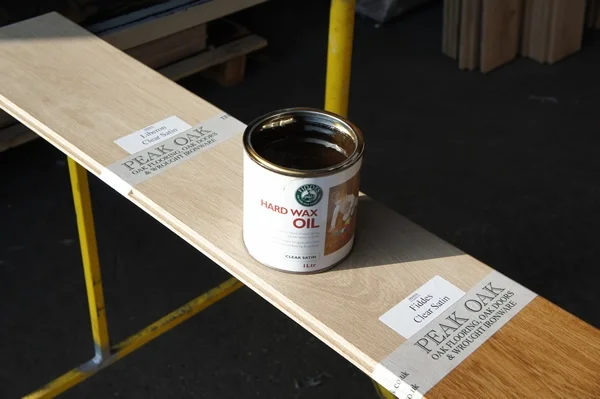
With the Fiddes Hardwax Oil we found that the oil itself was quite a thick texture but also quite runny.
Application of the oil was easy with quick coverage of the board.
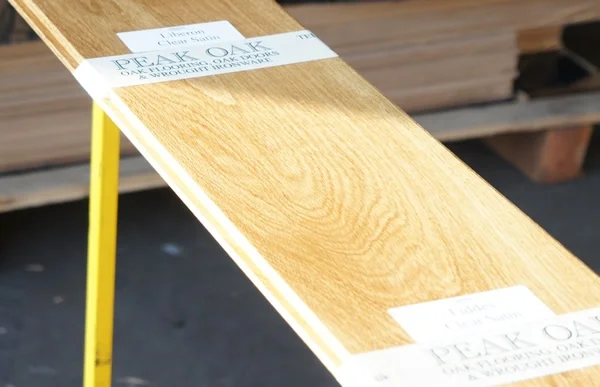
The drying time compared to the Osmo oil was quick, however we did find it to be slightly slower to reach a tack dry stage than the Treatex and Blanchon alternatives.
Specifications
- Before Application: Shake/Stir
- Texture: Thick/Runny
- Oil Colour: Brown
- Drying Time: Quick
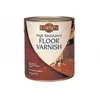
Liberon Floor Varnish – Clear Satin
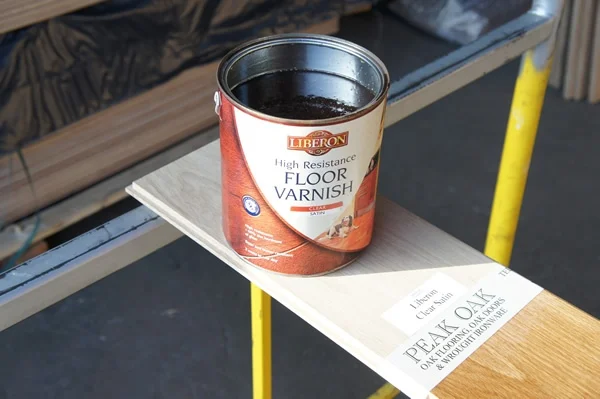
As the one of the only finish that we tested that was not a hardwax oil, it was interesting to see how it compared to the rest.
The varnish was a brown colour which was very thin in texture.
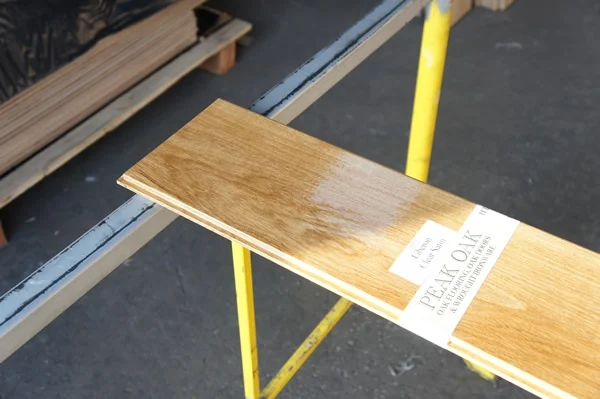
Application of the varnish was very quick as it quickly coated the board.
However we found that the drying time for the varnish was one of the longest, beaten only by the drying time of the Osmo Polyx-Oil.
Specifications
- Before Application: Shake/Stir
- Texture: Thin
- Oil Colour: Brown
- Drying Time: Slow
First Coat Results
Application
Although all of the finishes were generally easy to apply, the thin nature of the Treatex Hardwax Oil Traditional – Clear Satin made it slightly more difficult to apply.
Drying Time
The Blanchon Hard Waxoil was easily the quickest of the oils to dry followed by the Treatex Hardwax Oil.
The slowest finish to dry was the Osmo Polyx-Oil – even after 19 hours of being left to dry, it was still tacky around the edges.
The Liberon varnish was equally slow – after 19 hours it was still slightly tacky and looked wet.
Finish
After just one coat we found that the Liberon Varnish had provided the most significant change in colour to the wood, making it appear quite dark and shiny.
The Blanchon Hard Waxoil and the Fiddes Hardwax Oil finishes both provided an enhanced look, not far off a two coat finish.
The Osmo and Treatex oils however had the least significant change in colour, with both providing a thin, highly absorbed finish.
The Treatex Hardwax Oil however did seem to have a smoother feel to it, compared to some of the others.
Application Of Second Coat
Unlike the first coat, we decided to test the second coat of all the finishes under cooler conditions in a shaded area.
Second Coat Results
Like with the first coat, the differences between the finishes became even more apparent after the application of a second coat.
Application
We found that for the second coat, application of the oil was much the same as the first.
Drying Time
The drying time for the second coat of finishes followed much the same pattern as the first.
The quickest to dry were the Treatex and Blanchon Hardwax Oils with the Fiddes oil drying not long after.
The Liberon was the next to dry many hours later, with the Osmo drying last.
Finishes
Treatex Hardwax Oil Traditional – Clear Satin
We found that the final finish of the Treatex Hardwax Oil was reasonably smooth.
The surface of the board was quite rich in colour, similar in style to the Osmo Polyx-Oil.
However throughout the finish there were occasional marks.
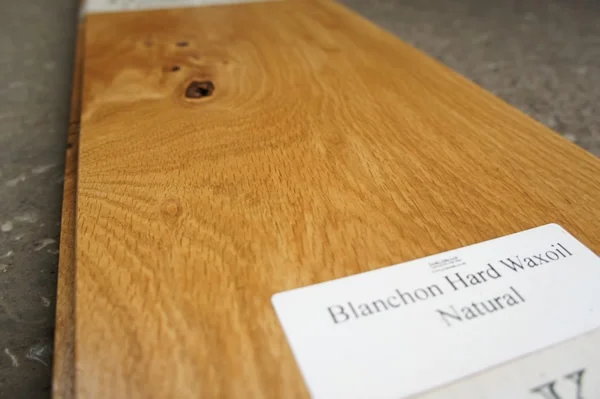
Blanchon Hard Waxoil – Natural
In terms of smoothness of the surface we found that the Blanchon finish was the least smooth.
It was slightly rough and felt a harder finish to touch.
The colour of the board however was rich and one of the best looking.
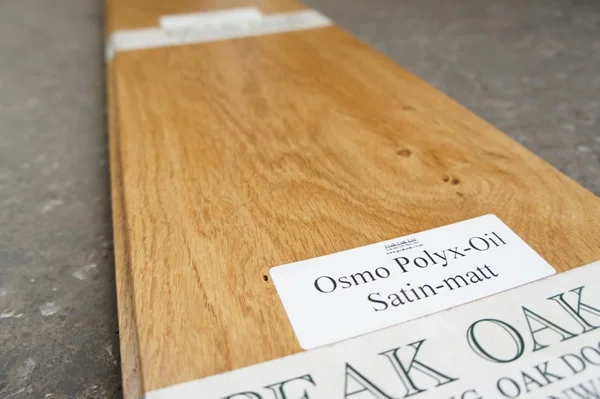
Osmo Polyx-Oil – Satin-matt
Similar in colour to the Treatex Hardwax Oil, the Osmo Polyx-Oil – Satin-matt had a reasonably smooth finish beaten only by the Fiddes and Treatex finishes.
We did find the finish in our test to be quite “streaky” and uneven in parts.
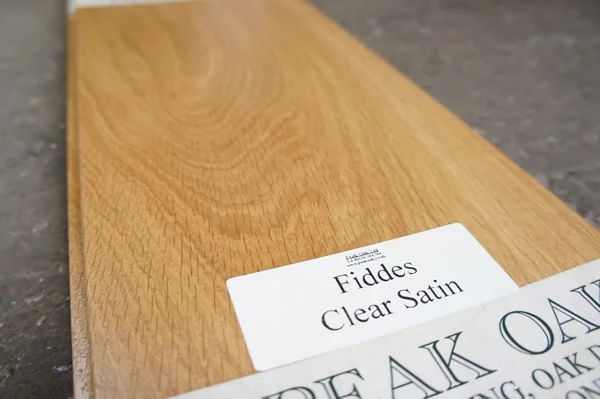
Fiddes Hardwax Oil – Clear Satin
For us the Fiddes proved to be have one of the smoothest and best colour finish.
The finish was completely uniform in colour, and its surface was smooth right through.
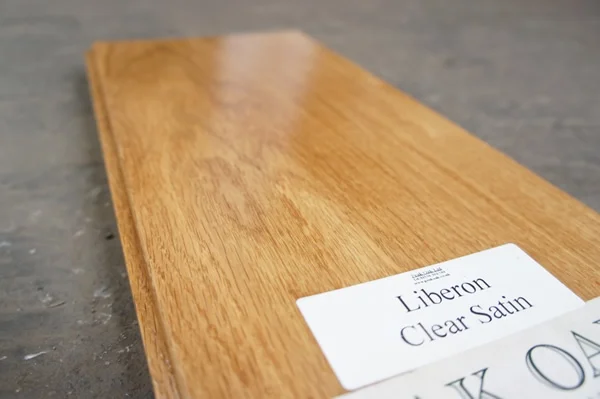
Liberon Floor Varnish – Clear Satin
As the only varnish to be tested it was always to be expected that the final finish would differ to the hard wax oils.
The Liberon Floor Varnish provided the most drastic colour change of them all, producing a dark shiny finish.
The varnish finish also provided one of the roughest of those tested, only slightly smoother than the Blanchon Hard Waxoil.
Best Finish
Deciding which finish looks the best is generally down to personal preference, but from the above results we have come to the following conclusions:
- Fiddes is one of the smoothest finish
- Treatex and Osmo are around the same with regards to smoothness
- In comparison the the Liberon Varnish and Blanchon were slightly rougher
- In terms of the way the finish looks we believe the Blanchon and the Fiddes Hardwax Oil were the best
- The Treatex and Osmo are perhaps a “notch” down
- In our opinion the Liberon is the least desirable, it seems just too shiny and looks quite tacky
Application Of Rubio Monocoat
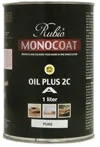
Unlike the above hard wax oil and varnish brands, the Rubio Monocoat requires a slightly different application process. Again this product is a hard wax oil, but has been designed so that only the one coat is required.
Before the application, some mixing is required. The oil itself (A) had to be mixed with an accelerator (B). These needed to be mixed approximately at a ratio of 3 units of A to 1 unit of B.
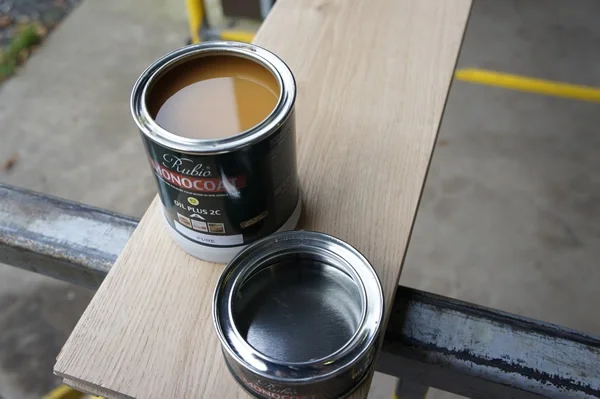
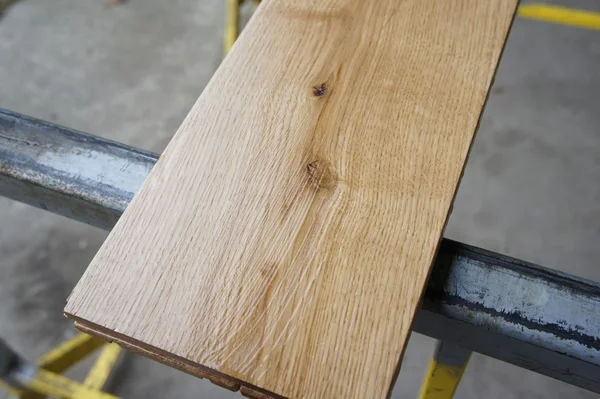
Once mixed, the oil itself was very easy to apply. It quickly covered the board without much effort needed.
In terms of drying, this oil was definitely one of the quickest, reaching a dry stage after around 30 minutes.
Specifications
- Before Application: Shake/Mix/Stir
- Texture: Thin
- Oil Colour: Beige
- Drying Time: Very Quick
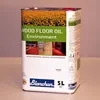
Application Of Blanchon Original Wood Environment
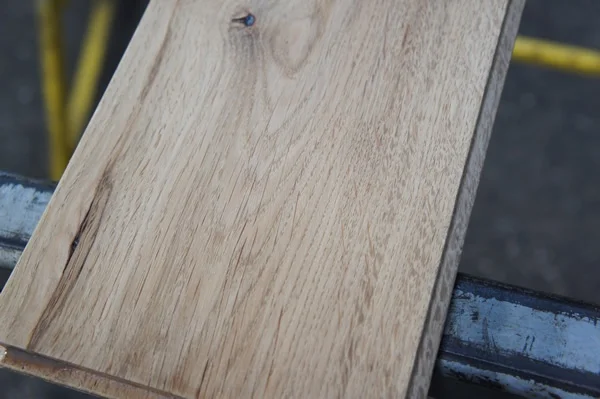
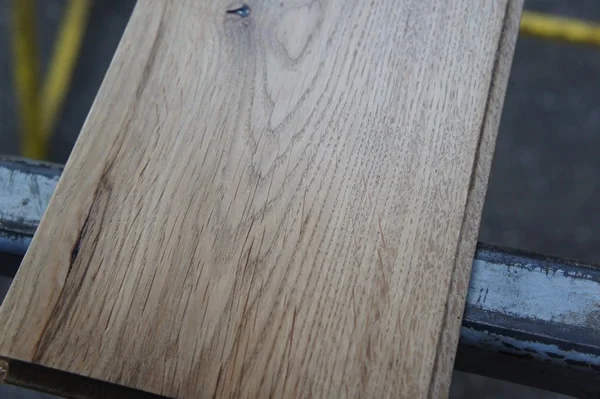
With the Blanchon Original Wood Environment again there is a slightly different application process. Three thin coats are recommended, to be applied using a natural bristle brush or roller. In this case we have applied the Blanchon Original Wood Environment – Natural.
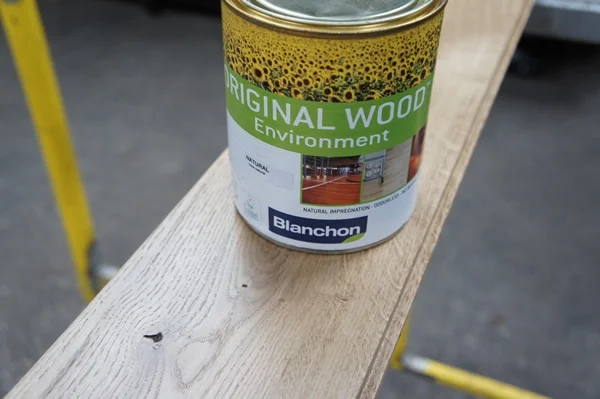
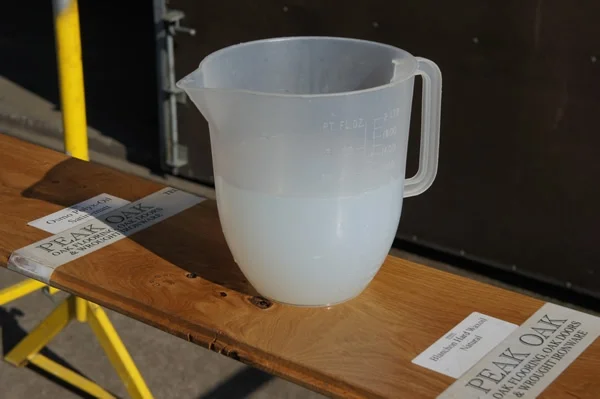
As the environment oil is a water based oil, the difference in texture is immediately obvious. The oil is very thin and milky in colour.
Each of three coats were applied thinly. These quickly and easily covered the surface of the board. This finish was by far the quickest to dry, with each coat drying in under an hour.
First Coat
Second Coat
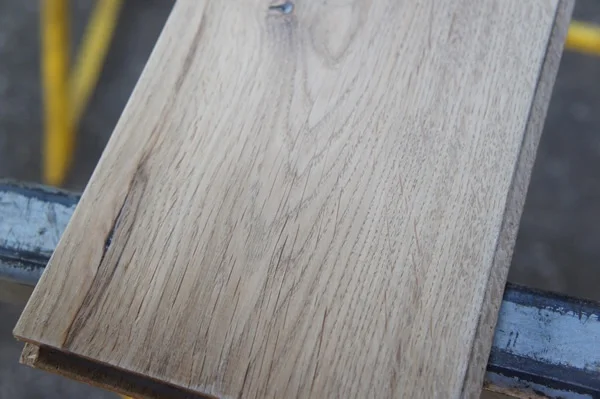
After applying the first two coats and they have been given time to dry, the finish can be lightly sanded. This helps to take out any slight rougher patches, leaving a much smoother finish.
Third Coat
Specifications
- Before Application: Shake/Stir
- Texture: Thin/Runny
- Oil Colour: Milky, Clear
- Drying Time: Very Quick
Application Of Bona Traffic HD
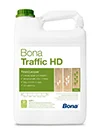
The Bona Traffic HD is the first lacquer that we have tested as apart of this test, and so therefore has a more complex application process.
As specified by Bona the first step was to apply a primer to the unfinished oak board. The primer is one of the factors that gives the colour to the board. For our tests we decided to test the Bona White and Bona Natural Primers.
Application Of Primer
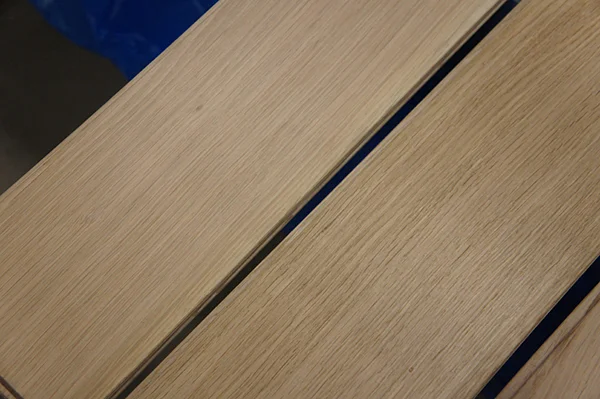
For the application of the primer, a roller was used. The thin nature of the primer ensure that the boards were soon covered. This process was the same for both the white primer and the natural primer. This first coat dried reasonably quick – fully dry after around 2 hours.
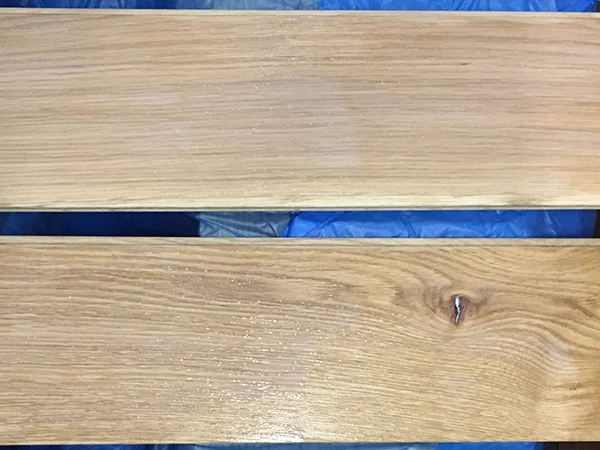
Once the first coat had fully dried, the second coat of primer could be applied. This was applied in exactly the same way as before.
Application Of Top Coat
With the primer applied, the next step was to apply the top coat of Bona Traffic HD. For this process the Traffic HD was required to be mixed with the Traffic HD Hardener. This was done in separate container – 1 litre corresponds to one part of hardener.
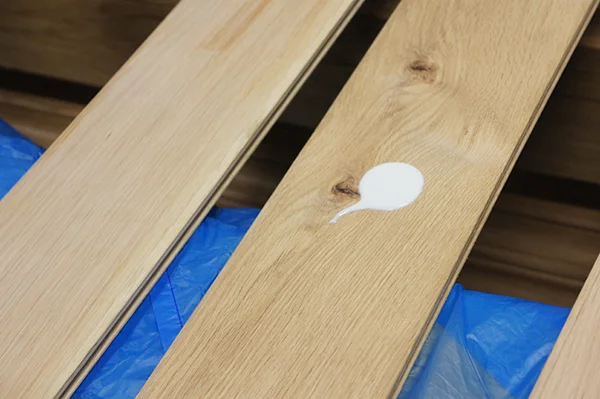
This combination was then applied to boards across and with the grain using a roller. Once dry, a further two coats were applied as before.
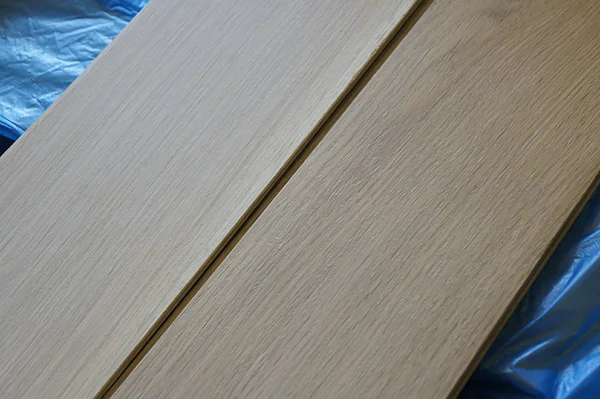
Straight away from using this product it was immediately obvious that the finish had raised the grain, leaving a rough finish.
Specifications
- Before Application: Shake/Stir
- Texture: Thin
- Drying Time: Quick
Testing
After leaving all of the finishes for a couple of weeks to fully harden, our next job was to test their durability and resistance against various sauces and stains to see how easy they were to clean.
Short Test
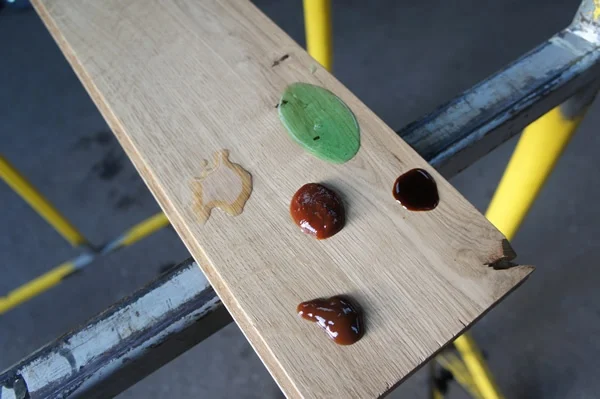
For the first test, vinegar, HP Brown Sauce, Henderson’s Relish and Reggae Reggae Tomato Ketchup were applied to the board.
These were left for 2 hours, before being cleaned off using a wash and care product.
The wash and care consisted of one full cap to one litre of water as per the manufacturer’s instructions.
Vinegar
A small area of each finish was covered with vinegar and then left for 2 hours.
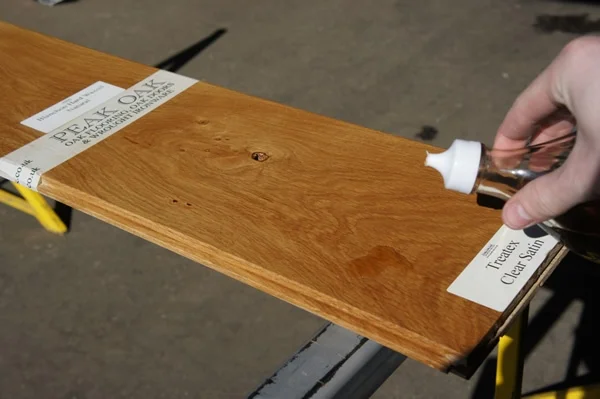
Over this period, the vinegar dried onto each of the finishes, but took the longest to do so on the Osmo Polyx-Oil.
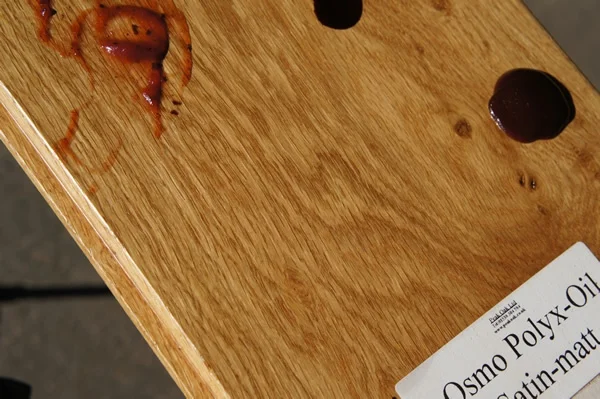
At the two hour point it appeared as though the vinegar had managed to stain all of the finishes.
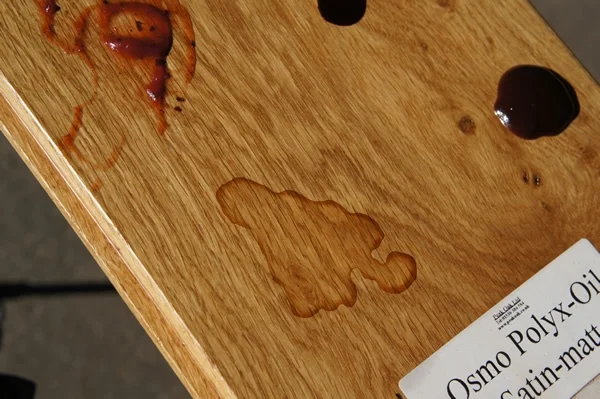
Upon cleaning however, it was apparent that this was not the case, with the vinegar wiping away very easily from all the finishes.
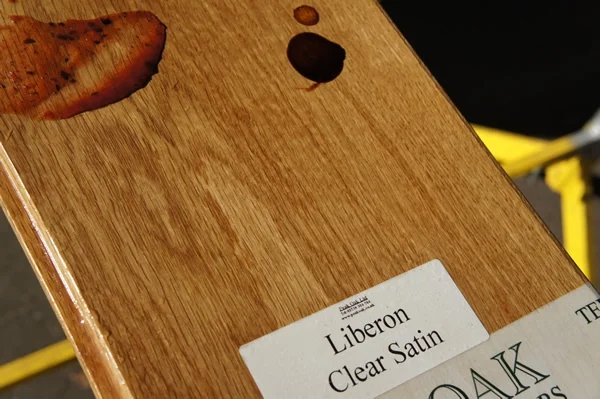
HP Brown Sauce
The next test was to see how the finishes handled HP Brown Sauce.
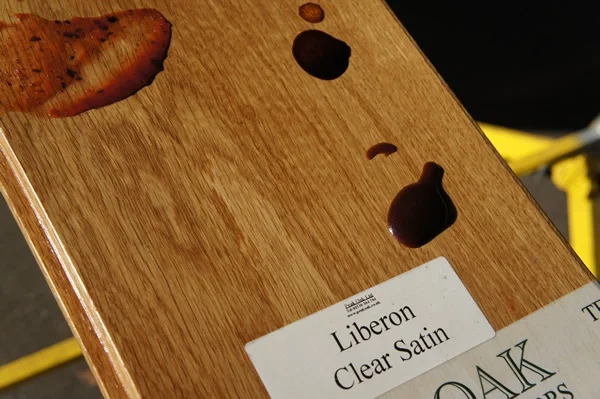
Cleaning wise this was one of the most difficult to remove, being an excessively “gloopy” sauce.
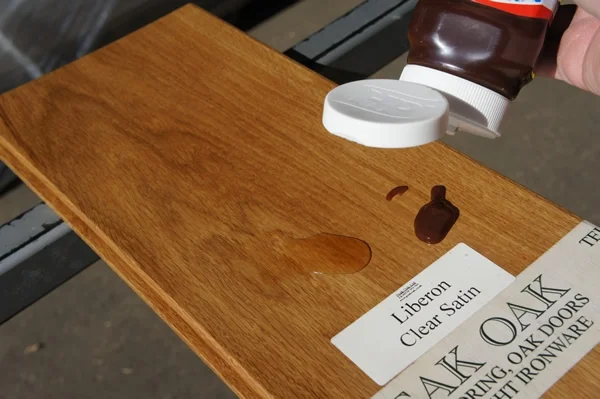
Once fully removed the brown sauce left no stains at all.
Henderson’s Relish
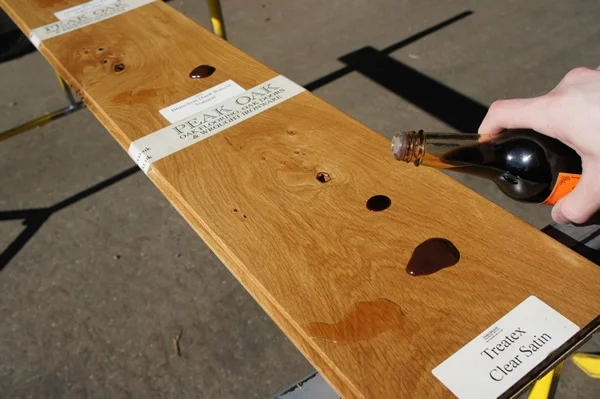
Henderson’s Relish was next to be tested on the finishes.
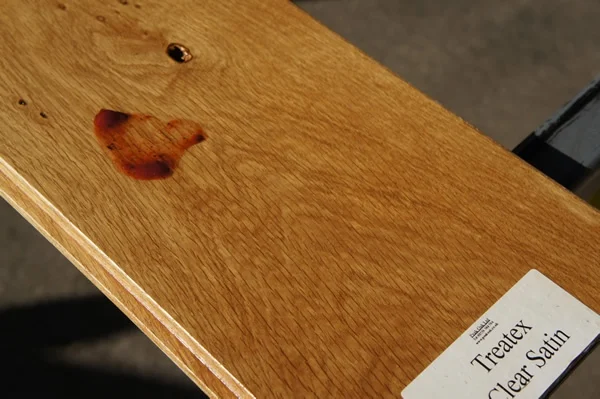
Once again, after two hours we found that the sauce was relatively easy to remove from all finishes with the help of the wash and care product.
Reggae Reggae Tomato Ketchup
The final product to test was Levi Roots’ own Reggae Reggae Tomato Ketchup.
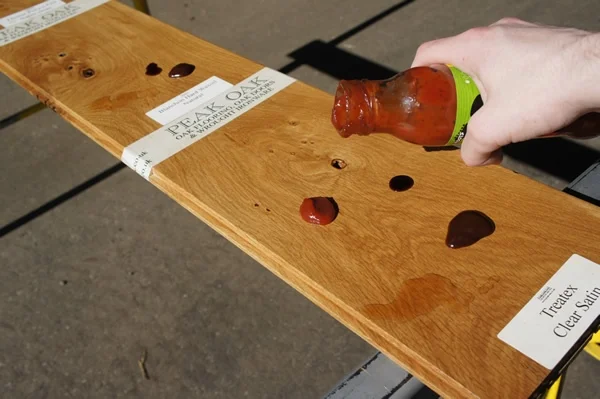
As a sauce with “real flava”, it proved to be the only real competition for the finishes in the 2 hour test.
We found this sauce the most difficult to remove, taking some real elbow work to get it gone!
After some hard work, the sauce appeared to have left the Liberon, Treatex and Osmo boards with a slight orange tint in certain areas.
Returning to the board 24 hours later, we realised that the sauce had in fact left a mark on some of the finishes.
We had to get the Wash and Care out again in a bid to remove it.
After a second wash, the board was generally free from any marks, although there was still a slight orange patch on the Osmo and Treatex sections of the board.
Short Test – Blanchon Original Wood Environment
Further to the hard wax oils and the varnish, we of course also tested the Blanchon Original Wood Environment
This was subjected to Reggae Reggae Sauce, Hendersons Relish, Vinegar and Washing Up Liquid.
As with the test above, this was left for a few hours.
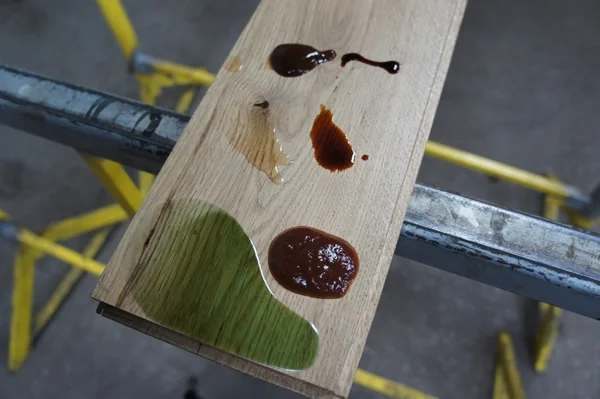
After this time had elapsed, we then begun the process of cleaning the board. This again was done using the floor soap. This quickly disposed of the vinegar and the Reggae Reggae sauce. The Hendersons Relish on the other hand did seem to leave a slight tinge to the board, however upon further cleaning this mark was no longer visible.
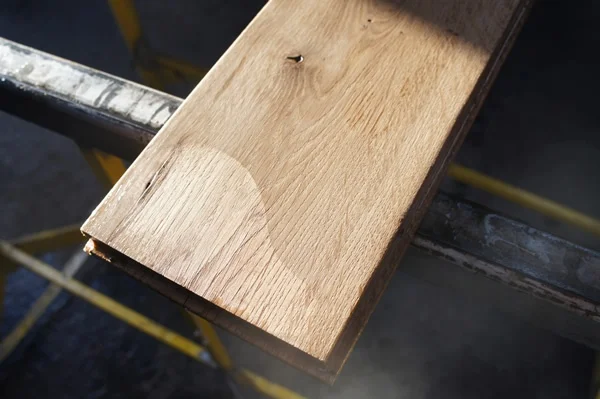
The washing up liquid produced the most damage by quite literally stripping the finish off the board.
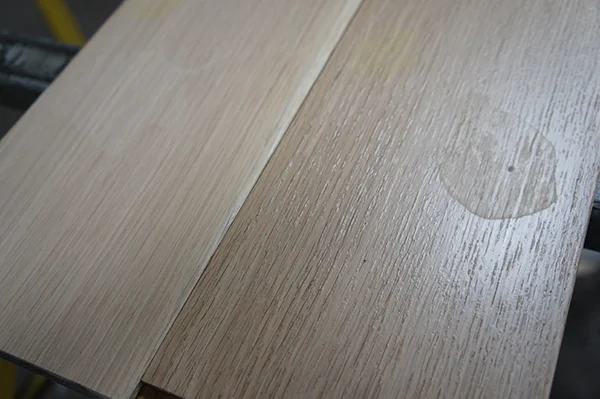
Short Test – Bona Traffic HD
As the only lacquer tested as apart of this test, it was interesting to see how the Bona Hd Traffic would handle the short test.
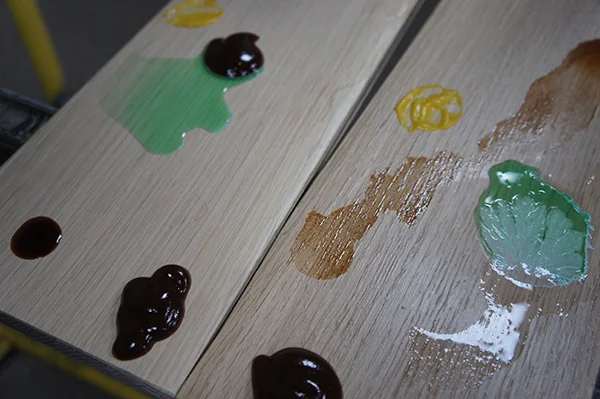
Like many of the finishes before it, the Bona HD was defeated by the washing up liquid. After just two hours it had marked and stripped the finish.
For this we also decided to introduce mustard to the test. The Traffic HD did not perform well with this, with a yellow stain left on the wood.
Short Test Results
From the first test, all of the finishes generally held up well and fought off the stains.
Despite the test including the likes of vinegar and relish, they were easily removed after 2 hours.
The only real competition for the boards was Levi Roots’ Reggae Reggae Tomato Ketchup, leaving a slight stain on all of the finishes and requiring some of them to be cleaned again.
Although there were no significant marks after a second cleaning, both the Treatex Hardwax Oil Traditional – Clear Satin and the Osmo Polyx-Oil – Satin-matt did have slight orange marks.
Blanchon Hard Waxoil – Natural, Fiddes Hardwax Oil – Clear Satin and the Liberon Floor Varnish – Clear Satin were all, as far as we could see, free from any marks or stains.
The Rubio Monocoat was also free from any marks.
As mentioned above as apart of the updated test, the washing up liquid proved to be too much for the Blanchon Original Wood Environment.
Long Test
From the results of the first test, we decided that the hard wax oil finishes had clearly had it too easy!
Therefore, for the second test, we decided to increase the length of time the various condiments were left on the board – rather than being a short two hours, we left them for 48 hours.
For this part we have decided to test even more substances including washing up liquid and Dettol Multi Purpose Cleaner.
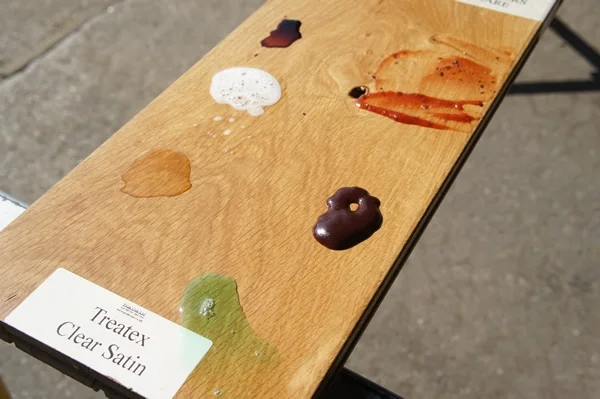
48 hours after application, each finish was then cleaned in the same way as before, using the Wash and Care product.
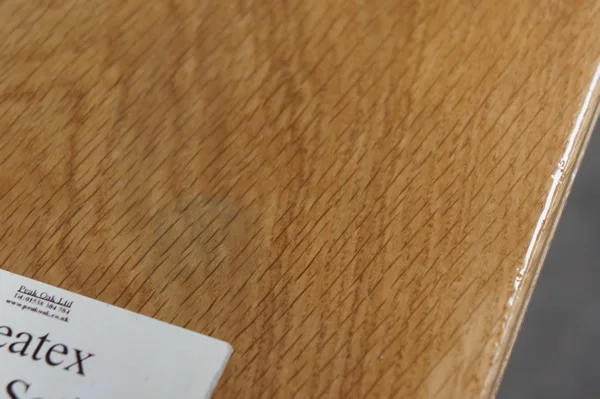
Treatex Hardwax Oil Traditional – Clear Satin
After cleaning, we found that the Treatex Hardwax Oil Traditional – Clear Satin still had a few different stains on its finish.
Both the vinegar and cup stain had left marks on the board, though these could potentially be removed with some further wash and care.
One of the most prominent stains however, was from the washing up liquid, which left a mark even after cleaning.
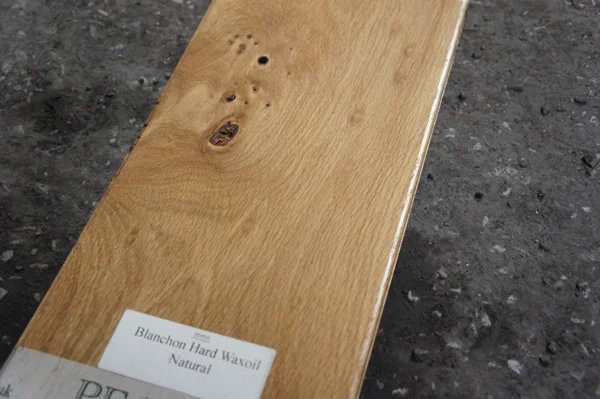
Blanchon Hard Waxoil – Natural
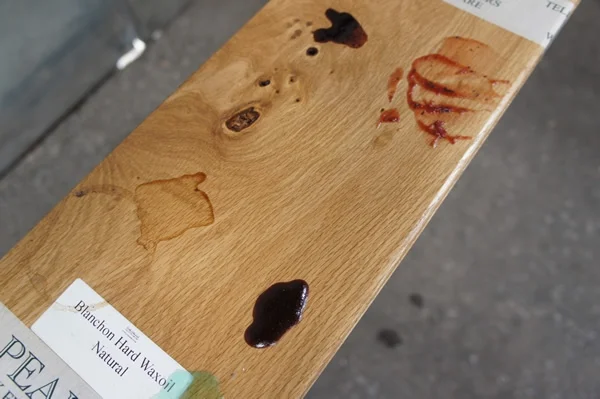
Once the Blanchon Hard Waxoil – Natural had been completely cleaned off we found the complete opposite to the Treatex Oil.
The hard-wearing nature of the Blanchon Hard Waxoil meant that there were no stains or marks whatsoever.
Osmo Polyx-Oil – Satin-matt
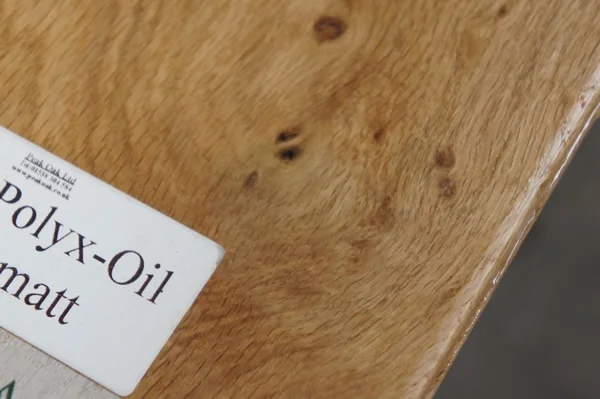
From the cleaning of the Osmo Polyx-Oil finish we found that a few marks had still been left behind.
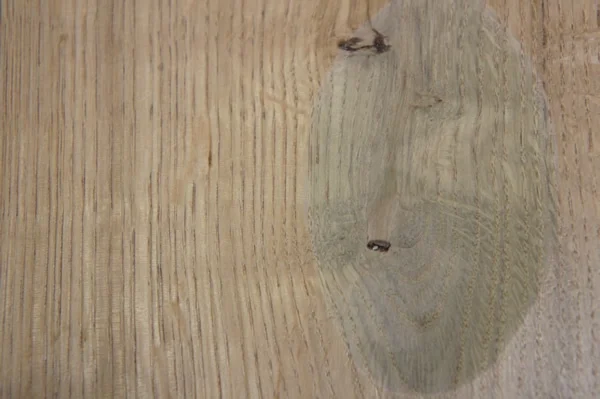
Once again the washing up liquid had managed to leave a slight greenish mark on the surface, taking away some of the finish’s colour.
Fiddes Hardwax Oil – Clear Satin
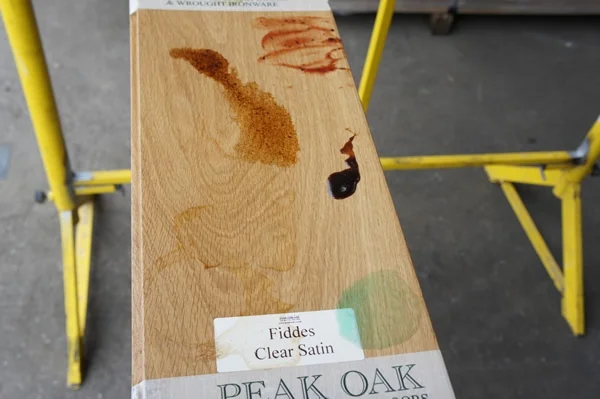
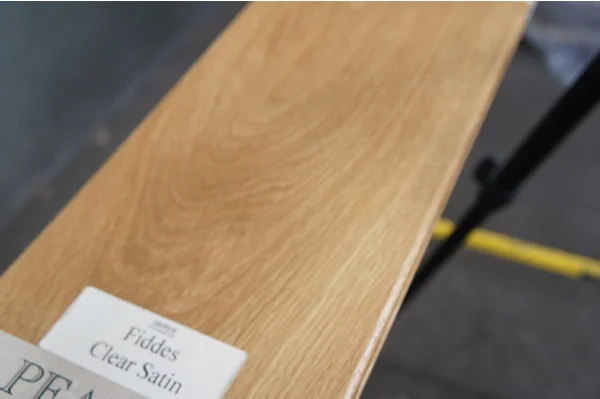
Like the Blanchon Hard Waxoil – Natural, the Fiddes Hardwax Oil also managed to remain completely stain free and retain its original look.
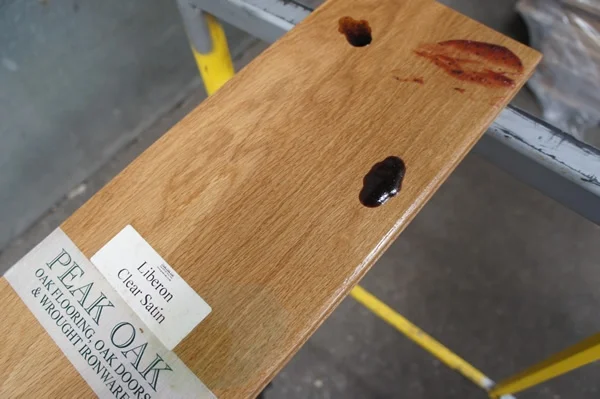
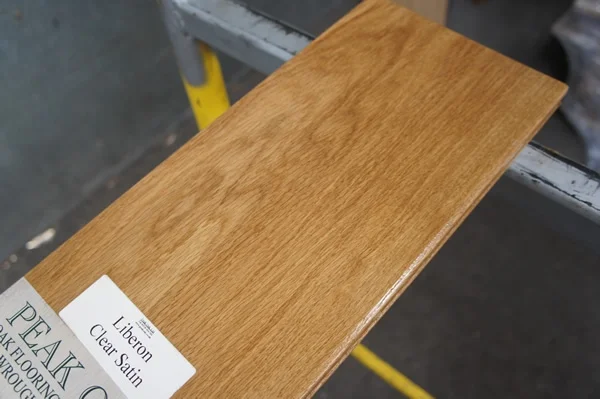
Liberon Floor Varnish – Clear Satin
After cleaning off the Liberon Floor Varnish, we once again found that there were no marks or stains left behind.
Rubio Monocoat
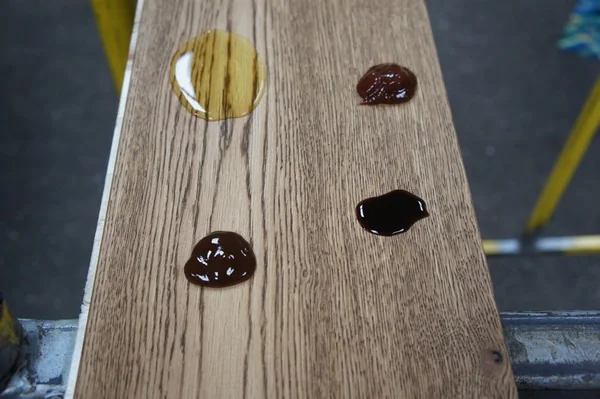
After successfully surviving the 2 hour test, the Rubio Monocoat was subjected to the 48 hour test.
Upon cleaning off the excess marks it was found that once again the washing up liquid had proved to be the finishes achilles heal.
The washing up liquid left the finish with a dark stain. Although we did find that the extremity of the stain did lessen over time, it still remained visible.
Blanchon Original Wood Environment
After the washing up liquid proved to be the environments weakness in the previous test, it was interesting to see how it would react to the long test.
The vinegar, brown sauce, reggae reggae sauce and the relish were all wiped away with ease.
The washing up liquid again proved to be its downfall. Unlike before, where the finish was stripped straight off, this time left it was left with a dark tint. However, upon drying, this mark did fade to show more bare stained wood.
Long Test Results
From the 48 hour test its easy to see that the Blanchon Hard Waxoil – Natural, Fiddes Hardwax Oil – Clear Satin and the Liberon Floor Varnish – Clear Satin were the clear winners.
The Osmo Polyx-Oil – Satin-matt and the Treatex Hardwax Oil Traditional – Clear Satin and Rubio Monocoat faired worst of the hard wax oils from this test with both of them being stained or marked by the washing up liquid.
Equally the test provided too much for the Blanchon Original Wood Environment and the Bona Traffic HD, once again the washing up liquid being the main culprit.
Final Results
This was not a scientific test, but we aren’t aware of anyone else having put these finishes up against one another in this way.
Here are the results we have had and the conclusions we have drawn:
The Osmo Polyx-Oil – Satin-matt and the Treatex Hardwax Oil Traditional – Clear Satin had similar performance in terms of final finish and resistance to various marks and stains.
Whilst the Liberon Floor Varnish – Clear Satin performed very well in the stain tests, we initially found its colour and finish to be not as desirable as the others. Over time though, the striking nature of the finish does seem to have mellowed and we’re now quite fond of it!.
The Rubio Monocoat performed quite well with the fastest drying time and a general resistance to most stains.
The Blanchon Original Wood Environment whilst suiting its own individual purpose of providing a more natural unfinished look, it did fall a bit short when subjected to some of the tests.
Equally the Bona Traffic HD provided a more “unfinished look”, but also suffered the same fate, marking in the long test.
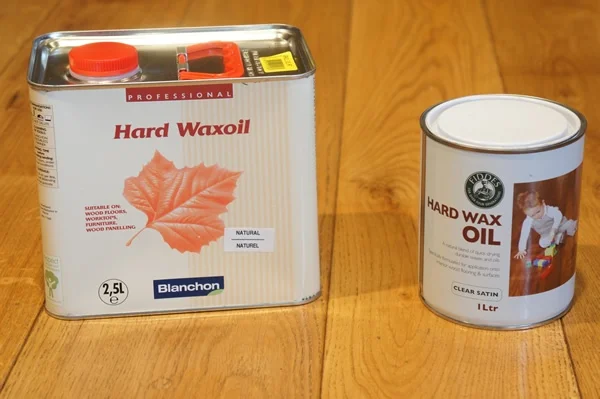
That leaves the Fiddes Hardwax Oil – Clear Satin and the Blanchon Hard Waxoil – Natural which, in our opinion, proved to be the best finish to use on your oak flooring.
We found that both of these finishes after two coats, left the board with a deep natural honey colour which was very attractive. The Fiddes Hardwax Oil was immediately the smoother of the two, but the Blanchon did eventually become smooth.
In the stain test both of these finishes performed equally well, with neither becoming stained by the washing up liquid or any of the other challenges in the 48 hour test.
 |
 |
 |
 |
 |
|
| Before Application | Shake/Stir | Shake/Stir | Shake/Stir | Shake/Stir | Shake/Stir |
| Texture | Thin/Runny | Thin | Thick | Thick/Runny | Thin |
| Oil Colour | Brown | Beige | Brown | Brown | Brown |
| Drying Time | Quick | Quick | Slow | Quick | Slow |
| Finish | Good | Best | Good | Great | Bad |
| Resistance To Stains | Not Very Resistant | Resistant | Not Very Resistant | Resistant | Resistant |
| Rating | 3 / 5 | 4 / 5 | 3 / 5 | 3.5 / 5 | 3 / 5 |
 |
 |
 |
|||
| Before Application | Mix With Accelerator | Shake/Stir | Mix With Hardener | ||
| Texture | Thin | Thin/Runny | Thin | ||
| Oil Colour | Beige | Milky, Clear | White | ||
| Drying Time | Very Quick | Very Quick | Quick | ||
| Finish | Good | Good | Good | ||
| Resistance To Stains | Reasonable | Not Very Resistant | Not Very Resistant | ||
| Rating | 3/5 | 3/5 | 3/5 |